Company

At some point in every brand's 3D journey, someone on the team asks: "Could we just do this ourselves?"
It's a reasonable question. 3D software is more accessible than it's ever been. Some brands have talented designers on staff. And the idea of owning the capability in-house has an obvious appeal: faster iteration, lower long-term cost, more control.
Here's what those conversations usually miss.
Producing photorealistic, web-optimized 3D content at the quality level that actually moves conversion metrics isn't a design project. It's a specialized engineering and production discipline that requires:
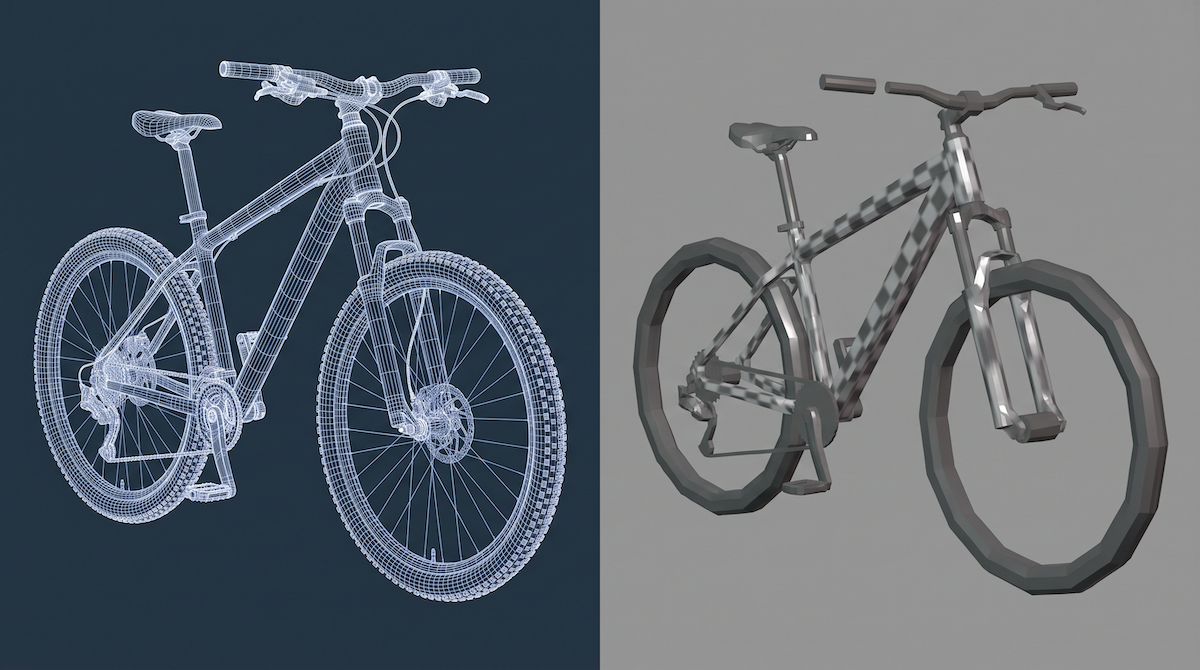
3D modeling expertise — specifically, artists who can produce photorealistic, physically-based rendering (PBR) models optimized for real-time web viewers. This is a different skill set from general graphic design, CAD engineering, or even game development.
Web performance engineering — a 3D viewer that looks great but tanks your page load speed actively hurts conversions and SEO. Optimizing polygon counts, texture compression, file formats (glTF, USDZ, WebGL), and delivery via CDN is a technical discipline in itself.
Retail channel integration — if you want that 3D content to live on Amazon, Ace Hardware, Google Shopping, or Home Depot (and you do), each channel has different technical specifications, compliance requirements, and submission processes. Managing those relationships and staying current with each platform's evolving standards is a full-time job.
Platform tooling — a Configurator isn't just a 3D model. It requires product logic rules, variant management, pricing integration, and analytics instrumentation. Building and maintaining that infrastructure from scratch is a significant software project.
Ongoing content management — products change. Finishes get discontinued. New SKUs launch. Every update to your catalog has to propagate across every channel, every viewer, every variant. Without a purpose-built system, this becomes a manual nightmare at scale.
The sticker shock of a 3D commerce partnership often prompts the "let's build it ourselves" conversation. But the real math looks different when you account for the full scope.
Hiring a senior 3D artist with eCommerce-specific experience runs $80,000 to $120,000 annually in most markets, and one artist can typically produce 2 to 4 production-quality SKUs per week. Add a front-end engineer to handle viewer integration and performance, and you're at $200,000+ in annual headcount before you've launched a single product.
That doesn't include software licensing for modeling and rendering tools, CDN costs, or the internal project management overhead of coordinating between your 3D team, your eCommerce platform, and your retail channel partners.
Most brands that go through this analysis discover that building in-house is only cost-competitive at very high SKU volumes with very low complexity: exactly the scenario where the per-unit cost of a managed service is also lowest.
The value of working with a specialist like Epigraph isn't just access to production capacity. It's access to a system that already works.
That means pre-built integrations with the retail channels your products actually sell through. It means a collaborative review process where your team sees and approves models before they go live, without needing to understand the technical stack underneath. It means a management platform where your merchandising team can push product updates across channels without filing a ticket with an engineer. It means analytics designed specifically for 3D content (conversion lift by SKU, engagement by viewer interaction type, session duration), not generic web analytics applied awkwardly to an interactive experience.
And it means a team that has solved the problems you don't know you're about to have: retail channel compliance quirks, rendering artifacts on specific device types, configuration logic edge cases. These are expensive to discover on your own.
In-house 3D capability genuinely makes sense for brands that:
- Sell products that change weekly (fashion, fast-moving consumer goods) and need to produce dozens of new models per month on tight timelines
- Have highly proprietary manufacturing data that can't be shared with external vendors for IP reasons
- Are building a differentiated consumer experience where the 3D tooling itself is part of the product, not just the presentation layer
For most brands selling durable goods (furniture, tools, outdoor equipment, wellness products, appliances), the better question isn't "should we build or buy?" It's "what's the fastest path to live 3D content that converts, and what does that unlock for our business?"
For most brands selling durable goods (furniture, tools, outdoor equipment, wellness products, appliances), the better question isn't "should we build or buy?" It's "what's the fastest path to live 3D content that converts, and what does that unlock for our business?"
Before committing to either path, ask:
- How many SKUs do we need in 3D in year one, and how complex are they?
- Do we sell through retail channel partners, and which ones require or support 3D?
- What's the fully loaded cost of in-house headcount vs. a managed service, at our actual SKU volume?
- What's the cost of a 6-month delay to get our first 3D content live while we hire and onboard?
- What do we lose in returns, conversions, and engagement for every month we don't have 3D?
That last question, the cost of inaction, is usually the one that settles the conversation. Brands using 3D see an average 135% lift in conversions and 38% fewer returns. For a brand doing $10M in annual eCommerce revenue, that math has a real dollar figure attached to it.
Curious what a 3D commerce partnership looks like in practice? Book a free demo and we'll scope what your first 3D project could look like and what it would take to get there.