Company

In the digital world, there’s no such thing as one-and-done. Every component of a creative product, from a viral video clip to a funny comment underneath it, has the potential to be remixed, repurposed, and remodeled, extending its life and adding to its value as each new version of itself inspires the next.
The same is true for your existing Virtual Photography models, and with Epigraph’s 3D platform powering the transformation, reigniting your product’s impact is easier than you might think.
If a picture is worth a thousand words, how you showcase your product says a lot about your brand.
Our solutions are proven to increase engagement, conversions, and even customer satisfaction.
For those who have already invested in Virtual Photography, you understand the value and versatility of 3D. The question is, if you already have 3D models, why would you need to invest in another 3D solution?
Epigraph’s platform provides an easy and cost-effective way to further enhance the stunning visual quality of your existing Virtual Photos with 3D experiences designed to delight, engage, and ultimately convert more effectively than Virtual Photography alone. And because we can utilize your existing models, you’ve got a head start that will save time and money. Once deployed, our solutions are proven to increase engagement, conversions, and even customer satisfaction.
For example, combining your existing 3D models with our Configurator solution would enable your customers to play with and personalize a wide range of product components and attributes. They’re free to experiment with different colors, materials, configurations, and more until they find one that fits their personal style best. It’s like a “just right” generator, providing an intuitive experience where there’s always more to explore. Customers love having easy access to so many customizable product possibilities, while brands love seeing their engagement rates reach new heights as time on-site takes off. And with every minute that goes by, a customer’s likelihood to purchase increases as their connection to the brand deepens.
What’s the difference between rendering models vs. models for web 3D?
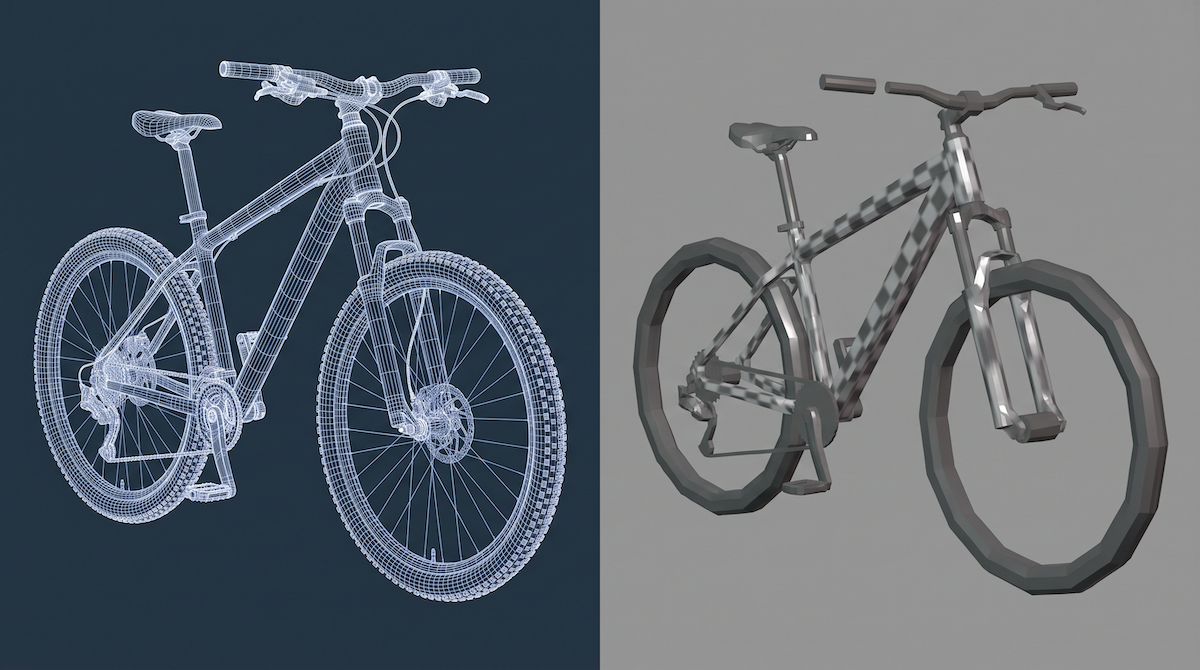
Web-ready 3D Models (like GLB) are optimized for real-time rendering in web applications, allowing interactivity and exploration.
High-poly Offline Render Models are designed for creating high-quality still renders or animations using professional rendering software, providing exceptional visual fidelity, but without interactivity.
The choice between the two depends on your project’s requirements, such as the intended use case, level of interactivity needed, and desired visual quality.
The Best of Both Worlds
At Epigraph, we have built tools to deliver exceptional results for both Web-ready Interactive 3D Models and High-quality Photorealistic Models, and we often use both outputs to complement each other.
For example, our Product Tours and Configurators rely on photorealistic renders to provide context for specific product details or functionality. Our high-poly meshes are often used to introduce and create photorealistic renders and animations, paving the way to delightful interactive experiences through which customers can customize and better understand the products they are interested in buying.